
Paw & Nail Care
How to check a cat’s claws and choose a nail tool
Scratching is normal cat behaviour. Many active cats maintain their claws with suitable scratching surfaces. Regular paw checks help you notice snagging and overgrowth, particularly in older cats or cats whose mobility has changed.
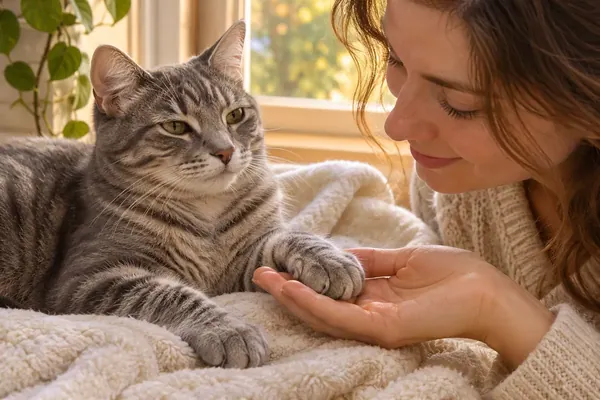
Look at the paw before reaching for a tool
Look for claws that catch on blankets, stay visible when the cat rests or become difficult to retract. Check the claws higher up the front feet and look for a curve approaching the pad. A sore, bleeding or swollen paw or a claw growing into the pad needs veterinary advice.
Give the cat a stable scratching surface it can stretch against, such as a tall post or a horizontal pad. A hollow shell that looks like a claw near the post may be a normal shed outer layer. Pay attention to sudden changes in how the cat walks or scratches.
If a trim is needed, keep it brief
Start when the cat is calm. Support a paw and apply just enough pressure to see the claw. Identify the living tissue. With suitable cat clippers take only the clearly visible tip, well away from that tissue. If you cannot see it or the cat starts to struggle, stop and ask a veterinary professional to demonstrate.
Practise light paw contact separately if needed and let the cat move away. A paw check can be the whole session. Keeping early sessions brief gives a cat time to get used to handling.
Choose a cat-specific tool you can control
The cat nail scissors have a rounded opening and scissor handles. The adjustable cat nail clipper has a push-style mechanism and selectable hole settings. Check how clearly you can see the tip. The opening cannot indicate where living tissue starts. Use a cat-specific tool in place of human nail clippers.
Keep sample notes if you are comparing tools for a shop
For each cat tool sample in the nail-care range, record the intended species, how the tip is positioned, the grip and how well the cutting point stays visible. Confirm dimensions and materials before ordering.