
Walking & Comfort
How to measure and fit a dog collar or harness
Use the measurements of a standing dog and the chart for the exact design. Neck circumference helps you choose a collar. A harness may use both neck and chest measurements. Coat thickness and body shape affect how two products with the same size label sit.
Measure with a flexible tape
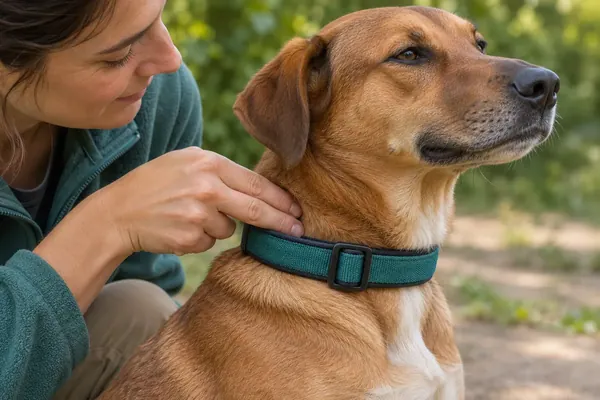
For a collar, wrap the tape around the neck where the collar will sit without compressing the skin. For a harness, follow the design’s direction for the neck and take the chest circumference around the broadest part of the rib cage behind the front legs. Let the dog stand naturally and repeat the reading.
Compare the measurements with the collar and harness size tables. If the neck and chest suggest different sizes or one measurement falls outside the range, ask about fit before choosing. Weight references can help narrow a sample review. Use the actual measurements to confirm fit.
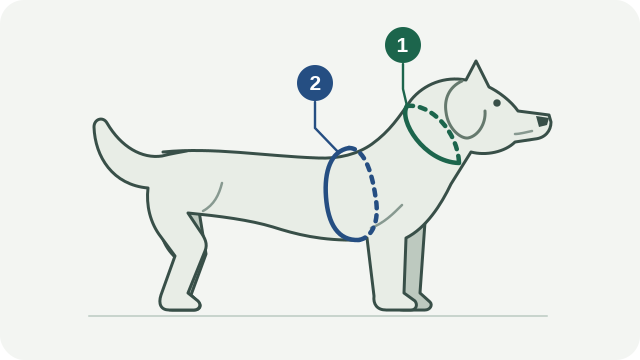
General measuring positions. Compare the measurements with the size chart for the exact collar or harness.
- Neck. Place a flexible tape around the neck where the collar rests. For a harness, follow the design’s instructions for the position of this measurement.
- Chest. Place the tape level around the widest part of the rib cage, just behind the front legs.
Check collar width, contact and hardware
Once the buckle is secured, check that the strap is comfortable and cannot easily slide over the head. You should be able to slide two fingers under a typical flat collar without forcing them. Watch the dog’s gait and look around the buckle and edges for rubbing.
Compare the reflective padded dog collar if lining and strap width matter, or the adjustable collar with tracker holder if a holder is part of the brief. Confirm device dimensions before pairing a tracker with the holder.
Check the harness in motion
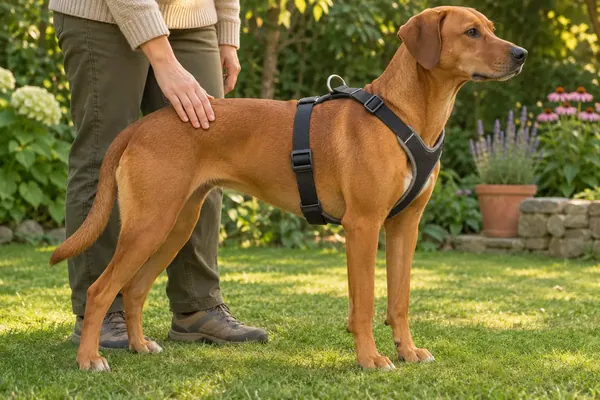
A fitted harness sits securely around the torso while leaving the shoulders free. Walk a short distance, include a turn and see whether a strap shifts across the shoulder or rides into the area behind the front leg.
Use the published neck and chest ranges for the X-shape step-in dog harness. Let the dog investigate the harness and reward voluntary steps towards it. Practise brief fittings before a full walk. If a buckle click worries them, work from a comfortable distance and build up gradually.
When trying this step-in design, place the front paws in the openings one at a time, then fasten the buckles. Check whether the dog can walk and turn comfortably with the lead slack.
Record enough to repeat the fit
After a trial, note the design, size, measured neck and chest, and any rubbing or shifting. Recheck after growth or a change in coat length or weight. Inspect the buckle, webbing and attachment point before use and replace worn items.
For a shop assortment, compare the collar and harness category by structure. Record demand by measured range and tie fit notes to a specific sample so later colour or size changes are easier to review.